
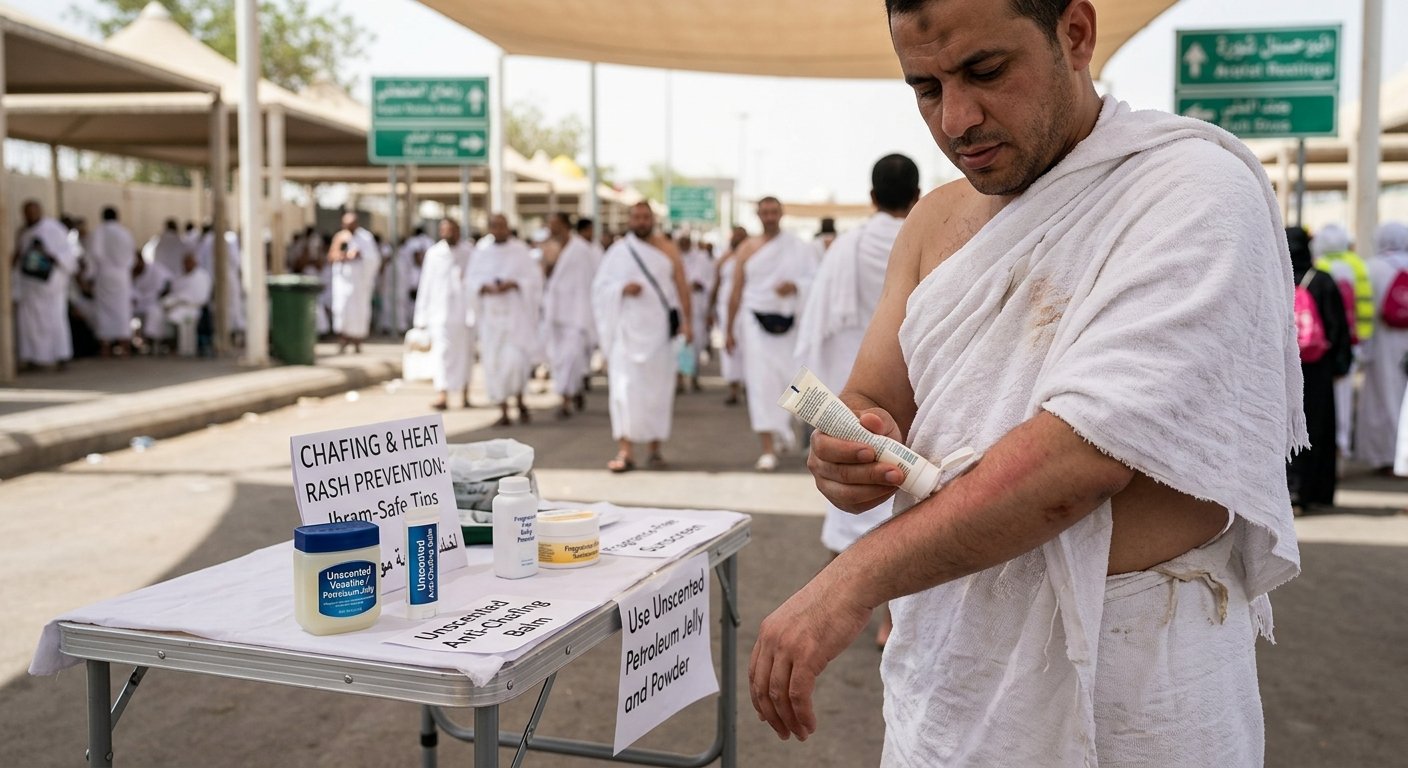
How to Prevent Chafing and Heat Rash During Hajj & Umrah (Ihram-Safe Tips)
How to Prevent Chafing and Heat Rash During Hajj and Umrah
Ask almost any pilgrim who has returned from Hajj or Umrah about their biggest physical discomfort and many will not mention the crowds or even the heat. They will talk about chafing. Hours of walking, sweating and friction can leave the inner thighs, underarms and feet sore, raw and painful, and turn a spiritually uplifting journey into a struggle with every step.
The good news is that chafing and heat rash are largely preventable. With a few simple habits and the right fragrance-free products, you can protect your skin without breaking any Ihram rule. This guide explains why rashes happen so often, how to prevent them, what to do if they appear, and what to pack.
Why Rashes Are So Common During Hajj and Umrah
The pilgrimage creates almost perfect conditions for skin irritation. Several factors combine at the same time:
- Constant walking: Tawaf, Sa’i and travel between holy sites can add up to many kilometres a day, often more than you are used to walking at home.
- Heat and sweat: Moisture trapped between skin surfaces or between skin and cloth increases friction and softens the skin, making it easier to damage.
- Ihram clothing: Men wear two pieces of unstitched cloth, and many pilgrims spend long stretches in the same clothes without a chance to change.
- Crowded conditions: Slow movement in the heat means more time spent sweaty and uncomfortable.
- Salt from sweat: As sweat dries, salt crystals remain on the skin and clothing, which can act like fine sandpaper.
- Limited access to rest and washing: During peak days, pilgrims may not have time or space to freshen up.
Chafing vs Heat Rash: What Is the Difference?
Many pilgrims use these terms interchangeably, but they are different problems.
Chafing
Chafing is caused by repeated friction. Skin rubs against skin or clothing until it becomes red, raw, stinging or even broken. It usually appears on the inner thighs, underarms, groin area, under the breasts, and around the waist.
Heat Rash
Heat rash (also called prickly heat or miliaria) happens when sweat ducts get blocked and sweat is trapped under the skin. It looks like small red bumps or tiny blisters and feels itchy or prickly. It is more common in hot, humid conditions and in areas covered by clothing.
Fungal Irritation
Warm, moist areas can also develop fungal infections, especially between the toes or in skin folds. These tend to be itchy, scaly or have a distinct ring-like patch. If a rash does not improve with basic care, it is worth asking a doctor.
Where Rashes Usually Appear
- Inner thighs
- Underarms
- Groin and buttock folds
- Under the knees and behind the elbows
- Between the toes and on the soles of the feet
- Around the waist where cloth rubs or is held in place
- Under the breasts and along bra lines for women
Prevention Tips That Actually Work
1. Keep the Skin Dry
Moisture is the main trigger for both chafing and heat rash. Carry a small clean towel and pat the skin dry whenever you can, especially after wudu, bathing or heavy sweating. Pat rather than rub, so you do not irritate sensitive skin.
2. Create a Barrier Before You Start
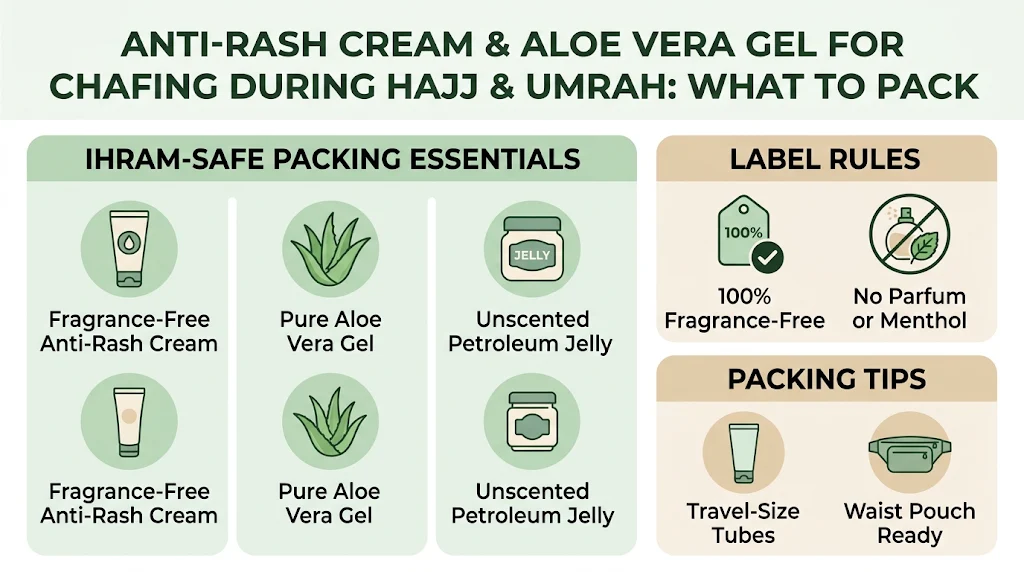
Before a long walk or a long day, apply a thin layer of a fragrance-free anti-rash cream to areas that are prone to friction. This creates a protective layer that reduces rubbing and helps skin tolerate sweat. Do this every morning, and reapply when needed.
Shop Fragrance-Free Anti-Rash Cream at Fragrance Free Care: Fragrance-Free Anti-Rash Cream
3. Choose Breathable Fabrics
Cotton allows air to move and absorbs sweat better than many synthetic fabrics. Choose light, loose clothing under or around your Ihram where permitted, and avoid tight or rough materials that increase friction.
4. Pace Yourself
Walking fast in the heat creates more sweat and friction. Take breaks in shaded or air-conditioned areas, sit down when you can, and let your skin cool and dry.
5. Stay Hydrated
Drinking enough water helps your body regulate its temperature and prevents very heavy, salty sweating. Dehydration also makes you more prone to heat illness, which is far more serious than a rash.
6. Bathe Daily With Fragrance-Free Soap
Wash away sweat, salt and dirt each day with a gentle, fragrance-free soap or face wash. Rinse well and dry the skin fully, especially in the folds. Scented soaps must be avoided in Ihram.
Shop Fragrance-Free Face Wash at Fragrance Free Care: Fragrance-Free Face Wash
7. Change Into Clean Clothes When Possible
Salt and sweat build up in fabric. If you have a spare set of Ihram or clothes, rotating them when you can helps reduce irritation.
8. Look After Your Feet
Wear comfortable, well-fitting footwear that you have already walked in. Dry the feet well, including between the toes, and change socks if you wear them. Blisters and fungal irritation often start with damp, rubbed feet.
How to Treat Rashes If They Appear
If you already have irritation, act early. Mild problems are much easier to settle than severe ones.
- Stop the friction. Slow down, rest, and adjust how your clothes sit.
- Wash gently. Use lukewarm water and fragrance-free soap or face wash. Avoid scrubbing.
- Pat dry fully. Skin must be completely dry before applying anything.
- Apply a thin layer of fragrance-free anti-rash cream. Reapply as directed.
- Cool the skin. Pure aloe vera gel can calm warm, irritated or sun-stressed skin.
- Keep the area uncovered when you can. Air helps healing.
Shop Fragrance-Free Aloe Vera Gel at Fragrance Free Care: Fragrance-Free Aloe Vera Gel
When to See a Doctor
Seek medical help if:
- The rash is blistering, weeping or spreading quickly
- The area looks swollen, very painful, or has pus
- You have a fever
- The rash does not improve after a few days of care
- You feel faint, confused or unwell, since this can be a sign of heat illness
Medical centres are available for pilgrims, and getting help early is always better than suffering through it.
Is Using Cream for a Rash Allowed in Ihram?
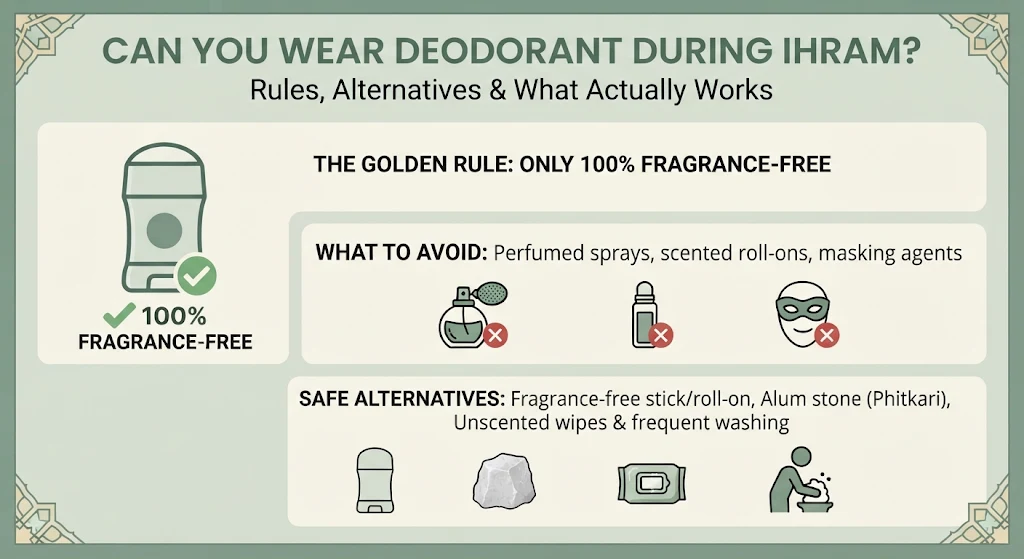
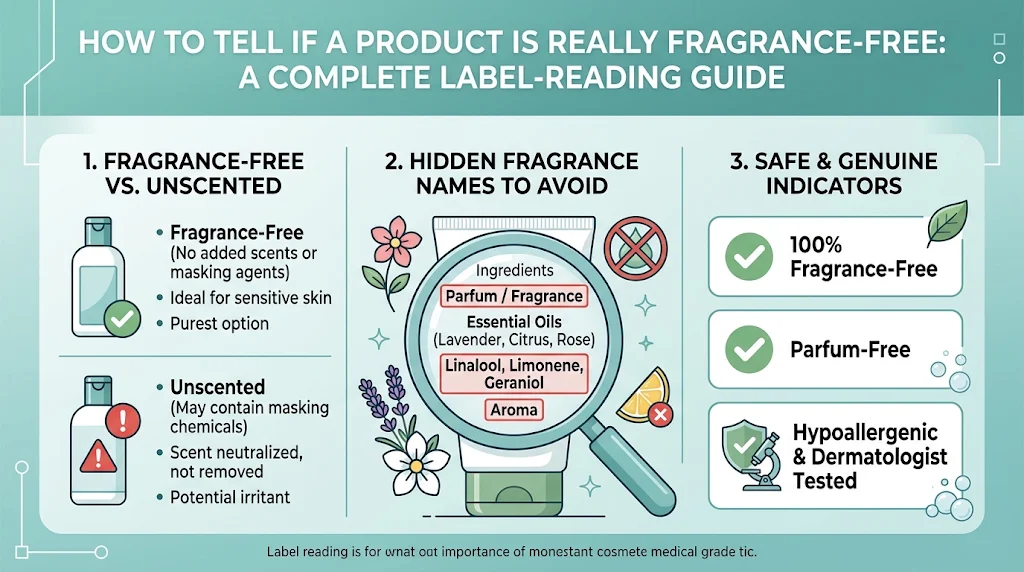
Yes, when the product is fragrance-free. The Ihram restriction is on perfume and scented products. Using an unscented cream to prevent or treat a skin problem is widely considered permissible, and many scholars regard it as a genuine need rather than a cosmetic choice. The key is to avoid any product that lists “parfum”, “fragrance” or essential oils on the label.
If you are unsure about a specific product or your situation, ask a qualified scholar or your group’s guide before the trip.
What to Avoid
- Scented powders and talcum powder. Many contain perfume.
- Creams with added scent. Even products with a “cooling” or “fresh” scent may contain fragrance.
- New products you have not tested. Try any cream at home on a small patch of skin first.
- Harsh scrubbing. This makes broken skin worse.
- Tight, synthetic clothing. It traps sweat and increases friction.
Daily Routine to Keep Your Skin Comfortable
Morning
- Bathe or wash with fragrance-free soap
- Dry thoroughly, especially in folds
- Apply anti-rash cream to friction-prone areas
- Apply sunblock to exposed skin
- Put on clean, breathable clothes
During the Day
- Drink water regularly
- Take shade breaks
- Pat dry when you can
- Reapply cream and sunblock if needed
Evening
- Wash off sweat and salt
- Dry well
- Apply aloe vera gel to warm or irritated skin
- Moisturize with a fragrance-free lotion
- Let the skin rest in loose, clean clothing
What to Pack for Skin Care
- Fragrance-free anti-rash cream
- Fragrance-free aloe vera gel
- Fragrance-free soap or face wash
- Fragrance-free sunblock
- Fragrance-free body lotion
- Small towel
- Spare clean clothes
- Comfortable, broken-in footwear
You can also see our full list in the fragrance-free Hajj packing list.
Frequently Asked Questions
Can I use Vaseline or petroleum jelly in Ihram? Plain, unscented petroleum jelly is generally considered permissible, but always check that it has no added fragrance. Confirm with a scholar if you are unsure.
Should I test products before travelling? Yes. Test any new cream on a small patch of skin at home a few days before you leave to check for irritation.
Can women use anti-rash cream in Ihram? Yes. The same fragrance-free rule applies to both men and women.
How early should I start prevention? Start from the very first day. It is much easier to prevent chafing than to heal it once the skin is broken.
What if I already have a rash before my trip? Treat it before you travel and consult a doctor if it persists. Do not wait until you are in Makkah.
Conclusion
A comfortable body helps a focused heart. With a few simple habits and the right fragrance-free products, you can protect your skin from chafing and heat rash and keep your energy for what matters most: your Hajj or Umrah. Keep your skin dry, create a barrier, stay hydrated, and treat small problems early.
At Fragrance Free Care, every product is made without fragrance so you can focus on your pilgrimage. For more guidance, read our article on skincare products allowed during Ihram.
Shop the Complete Hajj & Umrah Kit at Fragrance Free Care: Fragrance-Free Hajj & Umrah Kit
This article is for general guidance and is not medical or religious advice. For rulings specific to your situation, please consult a qualified scholar or doctor.
1 Comment