How to Tell If a Product Is Really Fragrance-Free: A Complete Label-Reading Guide
You’ve probably picked up a bottle that says “unscented” or “gentle,” assumed it was safe, and then dealt with redness, itching, or a flare-up a day later anyway. This happens more often than most people realize, and it’s rarely bad luck — it’s almost always a labeling gap. Brands use “unscented,” “fragrance-free,” “hypoallergenic,” and “gentle” as if they’re interchangeable, but only one of those terms actually guarantees what you’re looking for.
This guide walks through exactly how to read a label the way a dermatologist or ingredient-conscious buyer would, so you stop guessing and start knowing.
The Difference Between “Fragrance-Free” and “Unscented”
This is the single most important distinction to understand, and it trips up even people who are already trying to be careful.
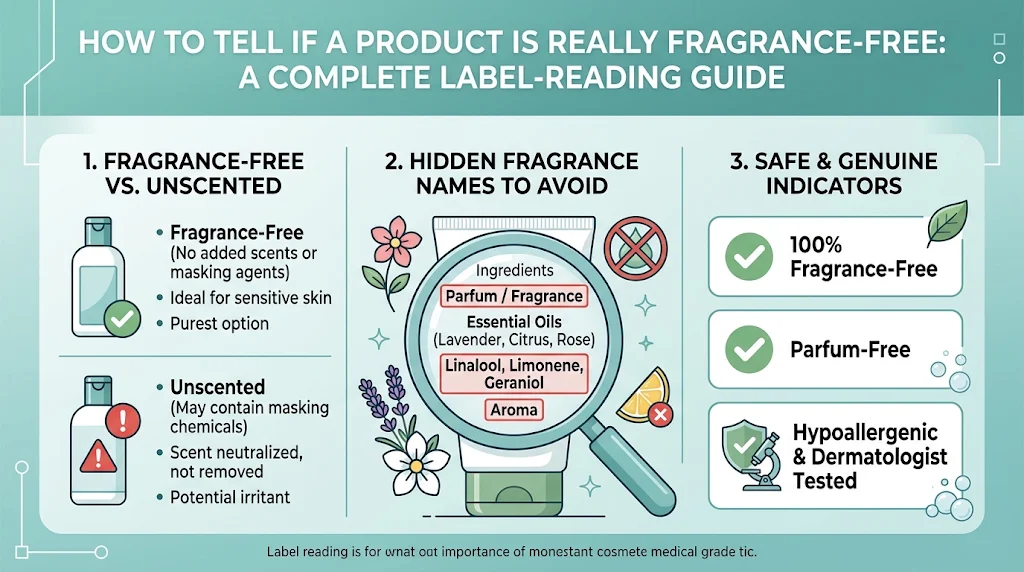
Fragrance-free means the manufacturer has not added any fragrance or masking compounds at all. Nothing has been included purely to create or neutralize a smell.
Unscented means the product may not have a noticeable smell to you, but it can still contain fragrance chemicals — specifically added to cancel out or cover the natural smell of other ingredients. The product doesn’t smell like anything, but fragrance compounds are still technically present in the formula.
For sensitive skin, Ihram compliance, or genuine allergy concerns, “fragrance-free” is the term you need. “Unscented” is not a safe substitute, no matter how often the two are used together in marketing copy.
Where Fragrance Hides on an Ingredient List
Once you know what you’re looking for, checking a label takes seconds. Scan the ingredient list for any of these terms:
- Fragrance or Parfum — the most direct giveaway, and the one most people already watch for.
- Aroma — functions the same way as fragrance but appears less often, mostly on products from European or French-labeled brands.
- Essential oil names (lavender oil, citrus extract, tea tree oil, etc.) — these are natural, but they still carry fragrance compounds and can trigger the same reactions as synthetic fragrance for sensitive skin.
- “Flavor” — on lip products and some oral care items, this term covers the same category as fragrance and is regulated similarly.
If you see any of these and the product is marketed as “fragrance-free,” that’s a labeling inconsistency worth avoiding altogether — a genuinely fragrance-free product simply won’t list any of them.
Product Categories That Commonly Hide Fragrance
Some product types are far more likely than others to quietly include fragrance, even when they don’t advertise a scent:
Moisturizers and body lotions. Because these products are designed to leave a pleasant feeling on application, fragrance is one of the most common additions, even in lines marketed toward sensitive skin.
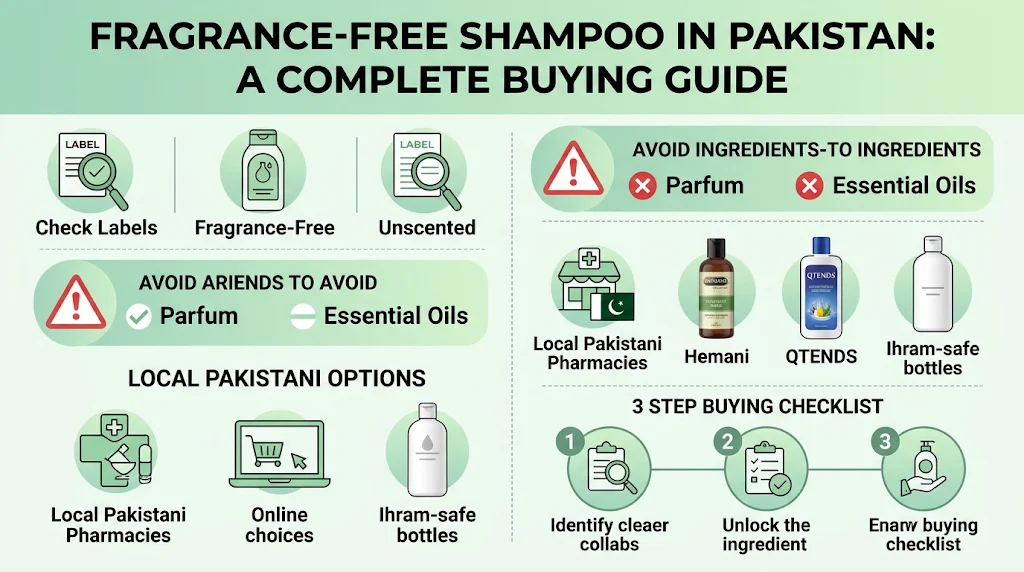
Shampoos and conditioners. Hair care is one of the heaviest fragrance categories across the entire industry, largely because scent is treated as a core part of the product experience. A fragrance-free shampoo specifically formulated without added fragrance is genuinely hard to find on a regular pharmacy shelf.
Bar soaps. Many “gentle” or “sensitive skin” soaps still carry a light fragrance to mask the smell of their base ingredients. A fragrance-free soap is a more reliable choice if you’re trying to eliminate fragrance from your routine entirely.
Talcum and body powders. These are almost always scented by default, which matters specifically for anyone trying to stay compliant during Ihram, where even a lightly scented powder can be a problem. A fragrance-free talcum powder avoids that issue entirely.
Wipes and travel-size toiletries. Convenience products often use fragrance to mask the smell of preservatives, making this one of the easiest categories to overlook while packing for a trip.
A Simple Checklist Before You Buy
Keep this short routine in mind the next time you’re deciding between products:
- Check the front label for the words “fragrance-free” specifically — not “unscented,” “gentle,” or “sensitive.”
- Flip the product over and scan the ingredient list for “fragrance,” “parfum,” “aroma,” or named essential oils.
- If the ingredient list is hard to find or unusually short, treat that as a reason to look elsewhere rather than assume the best.
- When in doubt, patch test on your inner forearm for 24–48 hours before using a new product on your face or across your body.
Why This Matters More for Certain Situations
For most people, fragrance in skincare is a minor preference. For a few groups, it’s a genuine necessity to get right:
Sensitive or reactive skin. Fragrance is one of the most common triggers for irritation and contact reactions, and unlike most other ingredients, fragrance blends aren’t broken down individually on labels, making reactions hard to trace back to a specific cause.
Eczema and similar skin conditions. Fragrance can aggravate already-inflamed or compromised skin barriers, which is why fragrance-free is a standard recommendation for anyone managing a chronic skin condition.
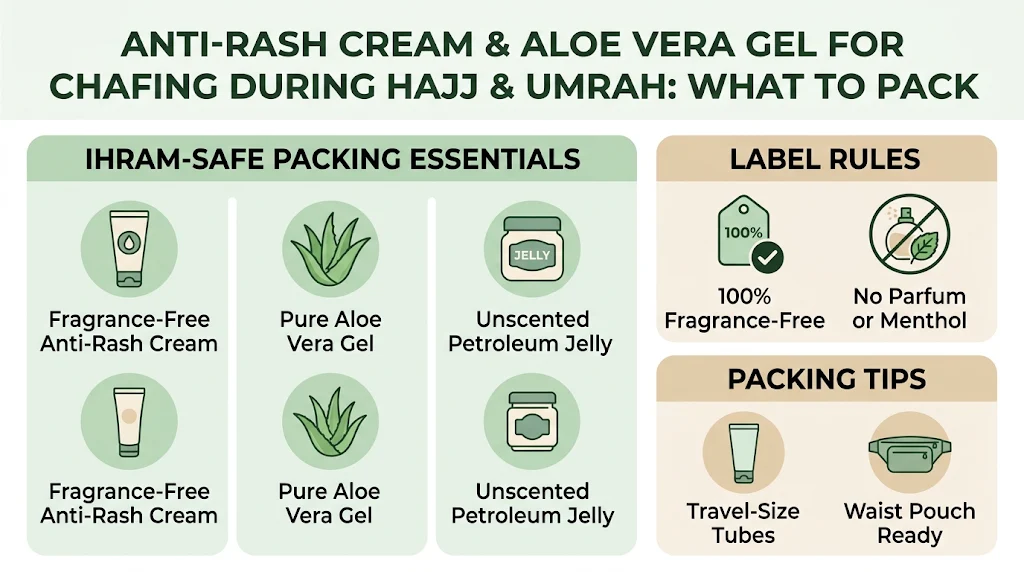
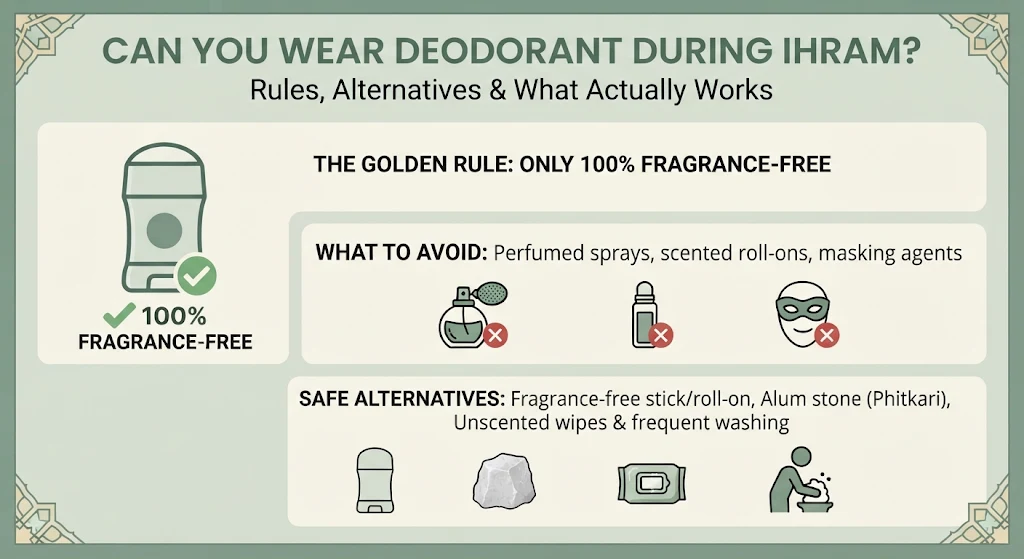
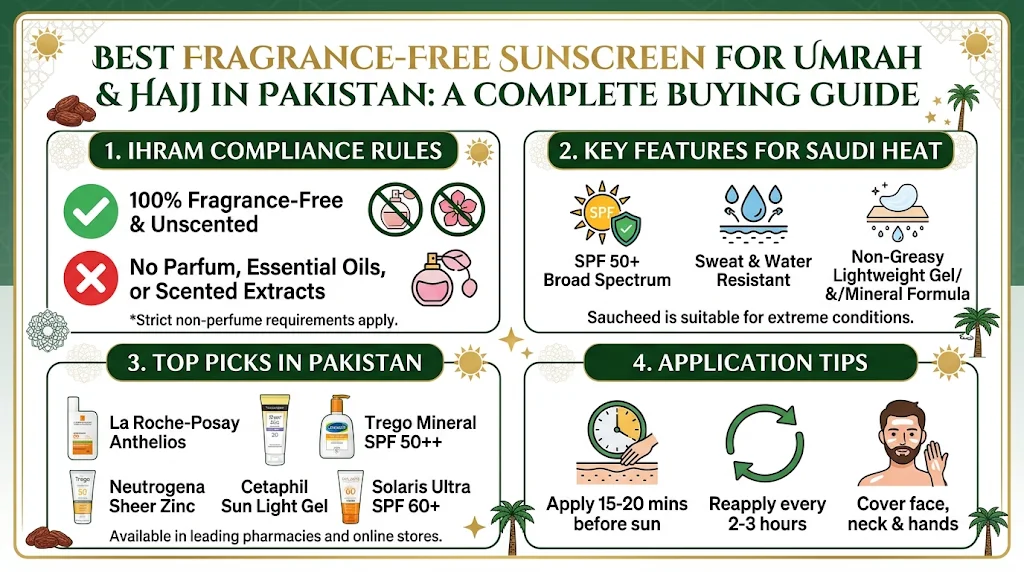
Ihram compliance during Hajj and Umrah. This is the strictest use case of all — even a trace amount of added fragrance can be a problem, which is exactly why reading past “unscented” matters so much for pilgrims specifically. Our guide on what skincare products are allowed during Ihram breaks this down product by product.
Building a Routine You Can Trust
Once you know how to check a label properly, building a fragrance-free routine stops being guesswork. Start with the products that stay on your skin longest — moisturizer, soap, and shampoo — since these carry the highest exposure and the highest risk if they’re not genuinely fragrance-free.
Final Thoughts
The gap between “unscented” and “fragrance-free” causes more confusion — and more reactions — than almost any other labeling issue in skincare. Once you know to check the ingredient list rather than the front-of-bottle claim, you’ll catch hidden fragrance in seconds instead of finding out the hard way after a flare-up.
Browse our full range of verified fragrance-free products to build a routine you don’t have to second-guess.