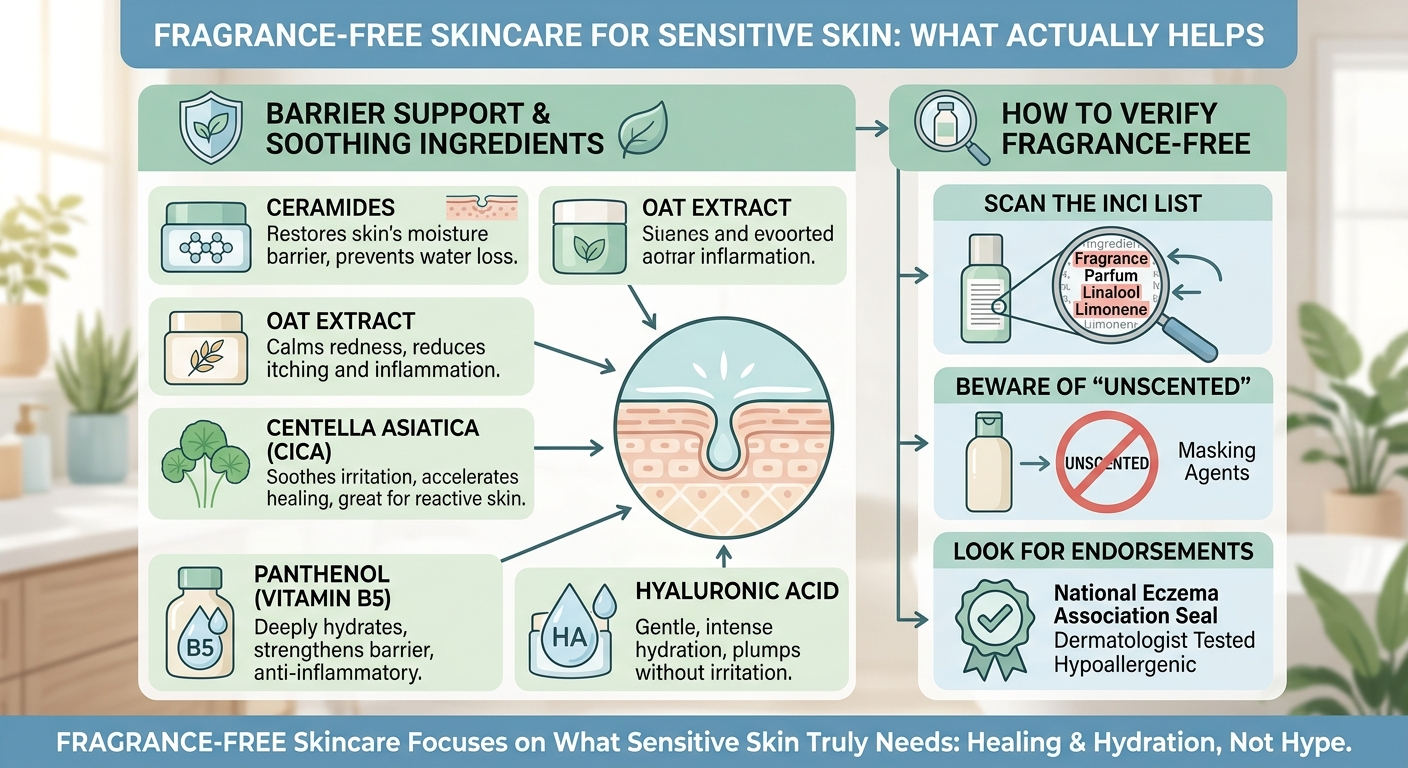
Fragrance-Free Skincare for Sensitive Skin: What Actually Helps
If your skin reacts to nearly everything you put on it — redness after a new soap, itching after a lotion, flare-ups that seem to come out of nowhere — fragrance is very often the hidden trigger. It’s one of the most common irritants in everyday skincare, and it’s also one of the easiest to avoid once you know what to look for.
This guide covers why fragrance causes so many problems for sensitive skin, how to tell real fragrance-free products from products that just claim to be gentle, and which product categories to prioritize first.
Why Fragrance Is Such a Common Irritant
Fragrance is a broad term that can include dozens of individual chemical compounds bundled together under a single ingredient line, often just listed as “parfum” or “fragrance.” Because these compounds aren’t required to be broken down individually on the label, it’s nearly impossible to know exactly what’s causing a reaction. For people with eczema, rosacea, allergies, or generally reactive skin, this makes fragrance one of the least predictable ingredients in a routine — and one of the most common causes of contact irritation.
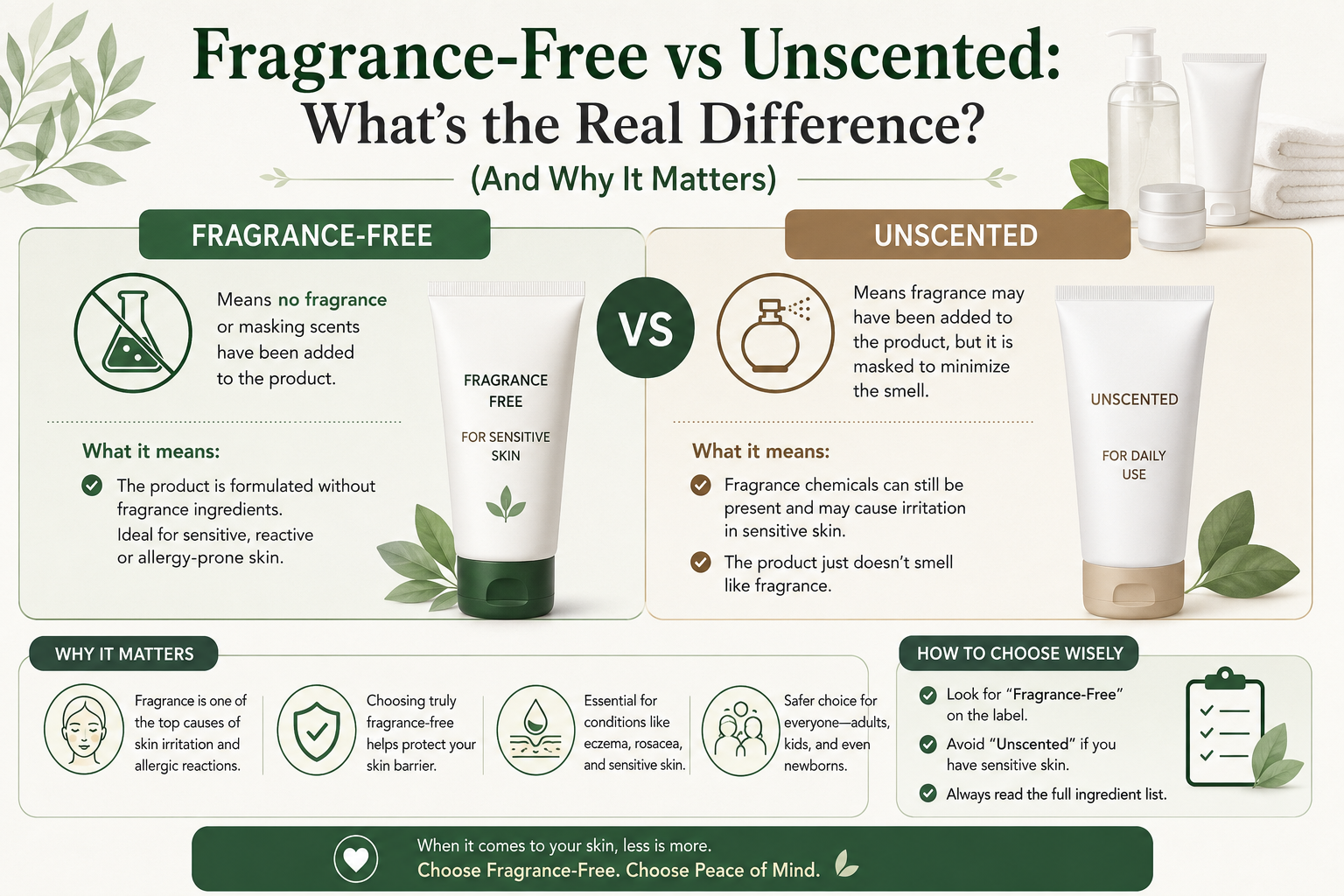
This is different from products labeled “unscented,” which may still contain masking fragrances to cover the smell of other ingredients. True fragrance-free products skip added scent compounds entirely, which is why dermatologists frequently recommend them specifically for sensitive and reactive skin types.
Where to Start: The Products That Matter Most
Not every product in your routine needs to change overnight. Focus on the ones that stay on your skin longest or cover the most surface area first.
Cleansers. A daily face wash sits on your skin (even briefly) every single day, which makes it one of the highest-impact swaps you can make. A fragrance-free face wash removes dirt and oil without introducing the scent compounds that trigger many reactions.
Body soap. Bar soaps and body washes are applied over your body’s largest surface area, so a fragranced formula here has an outsized effect. Switching to a fragrance-free soap is often the single biggest change people with reactive skin make.
Moisturizer. Because moisturizer is designed to stay on the skin rather than rinse off, any fragrance in it has more time to cause irritation. A fragrance-free body lotion provides hydration without that added risk.
Rash and irritation relief. For skin that’s already inflamed — from eczema, friction, or an existing reaction — a fragrance-free anti-rash cream helps calm irritation without adding another potential trigger on top of it.
Soothing gel. For sunburn, redness, or general skin calming, a fragrance-free aloe vera gel is a simple, low-risk option to keep on hand.
How to Read Labels Properly
A few habits make label-reading much faster once they become routine:
- Look for the words “fragrance-free,” not just “sensitive skin” or “gentle” — those terms aren’t regulated and don’t guarantee an absence of fragrance.
- Check the ingredient list itself for “parfum,” “fragrance,” or “aroma” — even products marketed as fragrance-free occasionally list trace amounts.
- Patch test any new product on a small area of skin (like the inner forearm) for 24–48 hours before applying it more broadly, especially if you have a history of reactions.
- Introduce one new product at a time. If you switch your entire routine at once and have a reaction, you won’t know which product caused it.
Building a Routine That Works Long-Term
A sustainable sensitive-skin routine doesn’t need to be complicated. A simple structure many people find works well:
- Cleanse morning and night with a fragrance-free face wash.
- Moisturize immediately after cleansing while skin is still slightly damp.
- Apply rash cream or aloe vera gel to any specific areas of irritation as needed.
- Stick with the same products for at least two to three weeks before judging results — skin needs time to show a stable response.
Final Thoughts
Sensitive skin doesn’t need more products — it needs the right ones. Removing fragrance from your daily routine is one of the highest-impact, lowest-effort changes you can make if you deal with regular irritation. Start with your cleanser and moisturizer, watch how your skin responds over a couple of weeks, and build outward from there.
You can explore the complete range of fragrance-free skincare products to find what fits your routine.