How to Read a Skincare Label: Hidden Fragrance Names to Avoid
You pick up a lotion that says “gentle” and “dermatologist tested” on the front. At home, your skin turns red and itchy a few hours later. You look at the back and see a long list of ingredients you cannot pronounce. Somewhere in that list, fragrance is hiding, and it may not be called “fragrance” at all.
Whether you have sensitive skin, you are preparing for Hajj or Umrah where scented products are not allowed in Ihram, or you simply prefer products without added scent, learning to read a label is the most useful skill you can have. This guide shows you exactly what to look for, which words are red flags, and how to be sure that a product is truly fragrance-free.
Why the Front of the Pack Cannot Be Trusted
Words on the front of a product are marketing. Phrases like “natural”, “gentle”, “pure”, “hypoallergenic”, “for sensitive skin” and even “unscented” are often not strictly defined. In many countries, the same bottle can carry these words without any proof behind them.
The ingredient list on the back is different. It is the part of the label that has to describe what is actually inside. That is where you should look first, every time.
Where to Find the Truth: The Ingredient List
Ingredients are usually listed in order, from the highest amount to the lowest. The first few ingredients make up most of the product. Anything listed near the end is present in very small amounts, usually under one percent.
Fragrance is often found near the end of the list, because it is used in small amounts. That is exactly why many people miss it. They read the first few ingredients, see water and glycerin, and assume everything is fine. Always read the whole list from start to finish.
The Obvious Names for Fragrance
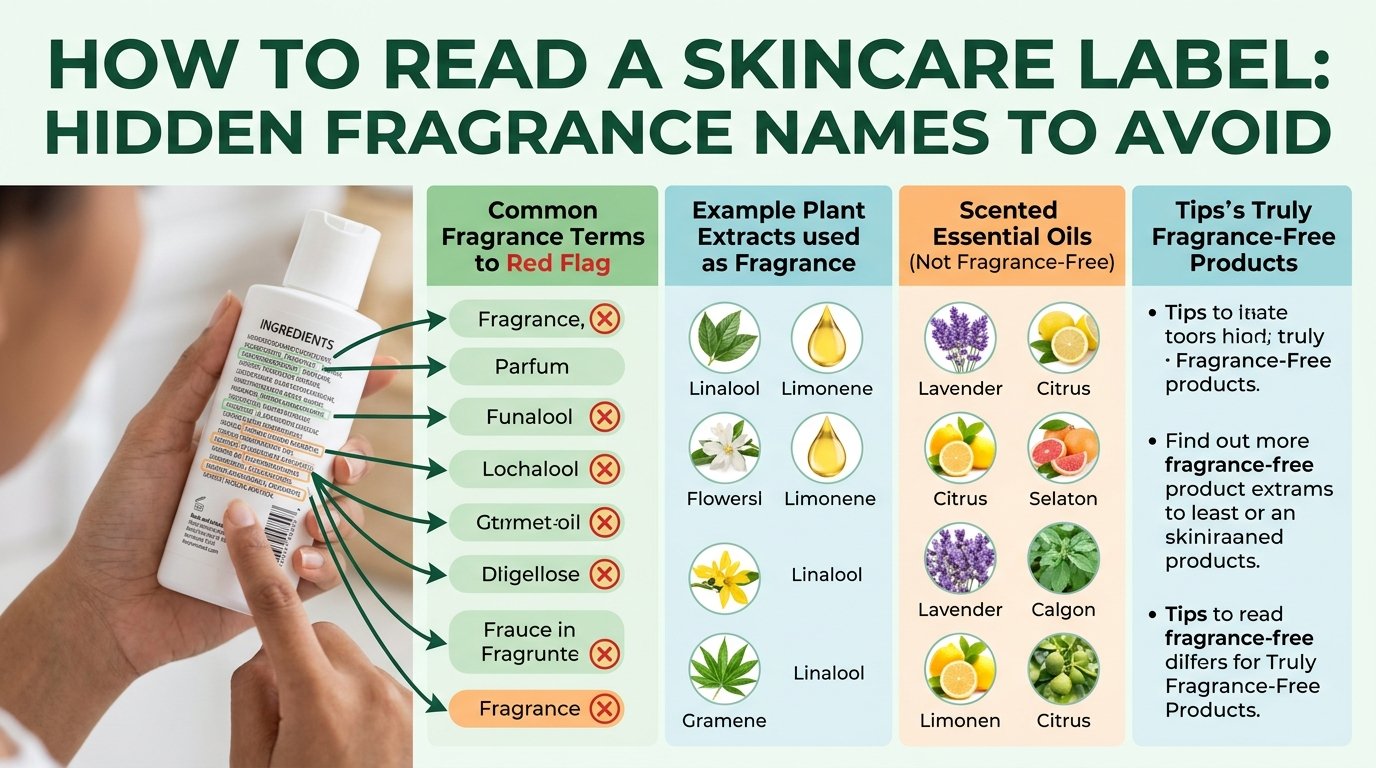
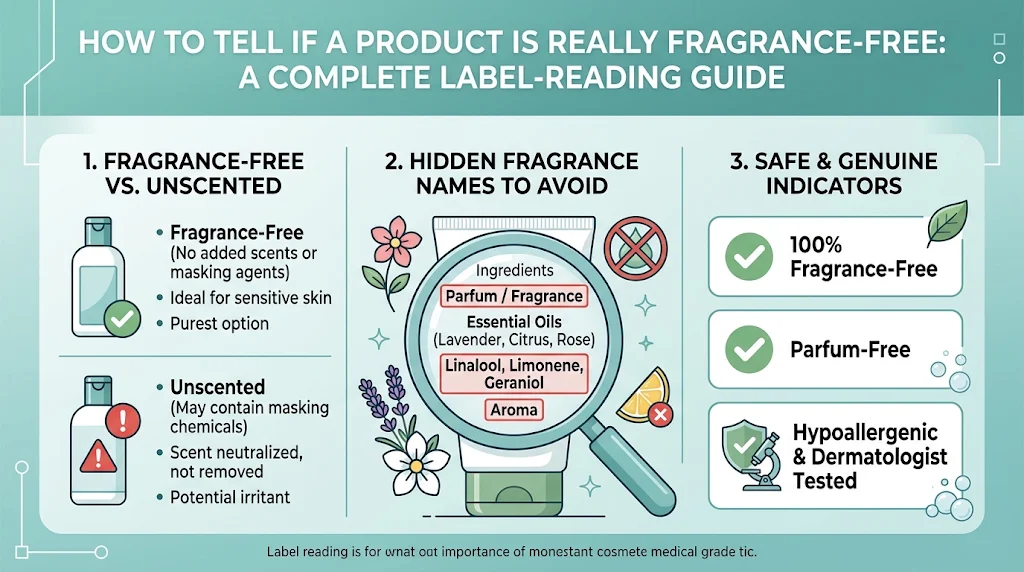
These are the most common words that mean the product has added scent:
- Parfum (the usual name on labels)
- Fragrance
- Perfume
- Aroma or aromatic
- Eau de toilette or eau de parfum
- Cologne
If you see any of these, the product is not fragrance-free. This is the first thing to check for Ihram and the first thing to check if your skin reacts easily.
The Hidden Names: Essential Oils and Plant Extracts
Many brands avoid the word “fragrance” and instead use plant oils and extracts that give the product its smell. These still add scent, and they can irritate sensitive skin, even though they sound natural. Watch for:
- Lavender oil (Lavandula angustifolia)
- Rose oil or rose water (Rosa damascena)
- Citrus oils such as orange, lemon, bergamot, grapefruit or lime
- Tea tree oil
- Peppermint or spearmint oil
- Sandalwood, cedarwood or patchouli oil
- Ylang-ylang, jasmine or neroli oil
- Eucalyptus, camphor or menthol (strong cooling scent)
- Vanilla, coconut or almond extract used for scent
Latin names often appear in brackets. If you see names like “Citrus aurantium”, “Lavandula” or “Rosa” in the list, there is a plant-based scent in the product.
The “Fragrance Allergens” Often Listed Separately
Some countries require brands to list certain well-known fragrance allergens separately when they are present. These ingredients are used to create scent and can cause reactions in sensitive people. If you see these in a product, scent is likely present:
- Linalool
- Limonene
- Geraniol
- Citronellol
- Citral
- Eugenol
- Coumarin
- Hexyl cinnamal
- Benzyl salicylate
- Alpha-isomethyl ionone
These names often appear at the very end of the list. If you see them, the product has added scent, even if the front says “natural”.
“Unscented” vs “Fragrance-Free”: A Critical Difference
This is where many people get confused. The two words look similar but do not always mean the same thing.
- Fragrance-free means no fragrance ingredients have been added to make the product smell like anything.
- Unscented can mean the product has no noticeable smell, but it may contain a masking fragrance that cancels out the natural smell of other ingredients.
For Ihram, and for very sensitive skin, fragrance-free is the safer choice. You can read a more detailed explanation in our guide on fragrance-free vs unscented.
Hidden Sources of Fragrance in Everyday Products
Fragrance does not only appear in perfume and lotion. It is often in products people do not think of:
- Soap and body wash
- Shampoo and conditioner
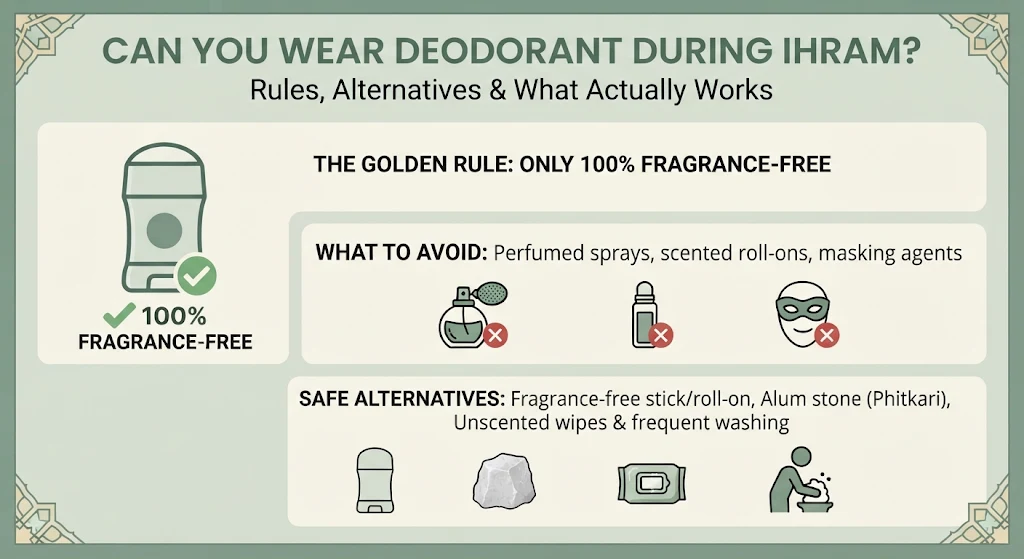
- Deodorant
- Sunscreen
- Face wash and cleansers
- Lip balm and lip care
- Wet wipes and tissues
- Hand sanitizer and hand wash
- Laundry detergent and fabric softener
- Talcum powder
- Sanitary products and diapers
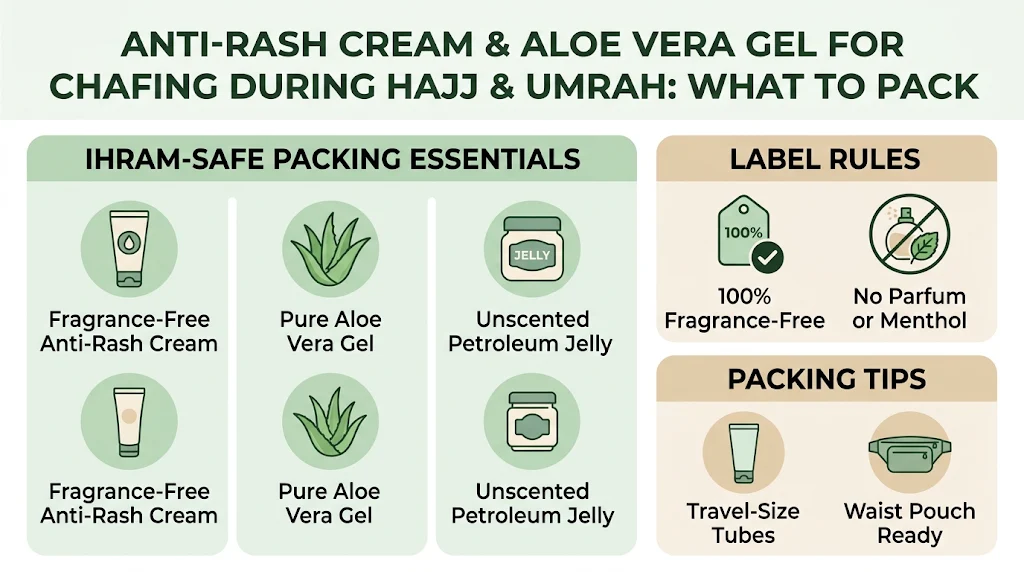
- Anti-rash and baby creams
When you are building a fragrance-free routine, check every item on this list and not only your moisturizer.
A Simple Five-Step Label Check
Use this routine every time you buy something new:
- Ignore the front. Words like “natural” and “gentle” do not tell you what is inside.
- Flip to the ingredients. Read the full list, including the last lines.
- Scan for red flags. Look for parfum, fragrance, essential oils, citrus, floral, camphor or menthol.
- Check for allergen names. Linalool, limonene, geraniol and citronellol point to added scent.
- Use your nose. If a product smells strongly of anything, leave it out, even if the list looks fine. A faint smell from the base ingredients is normal, but a pleasant perfume-like scent is not.
What a Good Fragrance-Free Label Looks Like
A trustworthy fragrance-free product usually has:
- A clear “fragrance-free” claim on the pack, not only “unscented”
- A short, simple ingredient list
- No parfum, essential oils, or botanical scent extracts
- A brand that explains what it means by fragrance-free
Shop Fragrance-Free Face Wash at Fragrance Free Care: Fragrance-Free Face Wash
Shop Fragrance-Free Body Lotion at Fragrance Free Care: Fragrance-Free Body Lotion
Why This Matters for Hajj and Umrah
In Ihram, applying perfume or scented products to the body or clothing is not allowed. A product that looks harmless may contain fragrance, and a pilgrim who does not read the label may use it without knowing. Reading labels before you pack is much easier than worrying about it during your journey.
A good habit is to go through your entire toiletry bag one item at a time before you travel, and remove anything with fragrance, essential oils or botanical scent. You can read more in our guide on what skincare products are allowed during Ihram. For rulings specific to your madhab or situation, please ask a qualified scholar.
Why This Matters for Sensitive Skin
Fragrance is one of the most common reasons for redness, itching, stinging and flare-ups in people with sensitive skin. Even a product with only a small amount of scent can cause a reaction, especially if you use it every day on a large area like your body or hands.
If your skin reacts to many products and you cannot find the cause, removing fragrance is one of the easiest first steps. Our guide on fragrance-free skincare for sensitive skin explains more. If reactions continue, please see a dermatologist, since many things can irritate the skin.
Do a Patch Test Before You Commit
Even fragrance-free products can irritate some people because of other ingredients. Before using a new product on your whole face or body:
- Apply a small amount to the inside of your forearm or behind your ear.
- Leave it for 24 hours without washing the area.
- Check for redness, itching, bumps or burning.
- If nothing happens, try it on a small area of the face for a few days.
This is especially important before a long trip like Hajj or Umrah, when you will not want to deal with a new skin reaction.
Common Label Mistakes to Avoid
- Trusting “natural” or “organic”. These words do not mean fragrance-free.
- Assuming “dermatologist tested” means no fragrance. It only means the product has been looked at by a dermatologist, not that it is scent-free.
- Reading only the first five ingredients. Fragrance is often near the end.
- Buying travel-size versions without checking. The small version can have a different formula.
- Ignoring the small print on refills and new batches. Brands sometimes change formulas.
Quick Pocket Guide: Words to Avoid
Keep this list on your phone when shopping:
- Parfum, fragrance, perfume, aroma
- Essential oil, any plant oil used for scent
- Lavender, rose, jasmine, ylang-ylang, sandalwood
- Citrus, orange, lemon, bergamot, grapefruit
- Peppermint, menthol, camphor, eucalyptus
- Linalool, limonene, geraniol, citronellol, citral, eugenol, coumarin
Frequently Asked Questions
Is “unscented” the same as “fragrance-free”? No. Unscented products may contain masking fragrance. Fragrance-free products have no fragrance ingredients added.
Are essential oils considered fragrance? Yes. They are used for scent and they can irritate sensitive skin. For Ihram, avoid products with essential oils on the label.
Can a product be fragrance-free and still smell? A faint, plain smell from the base ingredients is normal. A pleasant, perfume-like scent is not.
Is “parfum” the same as “fragrance”? Yes. Parfum is the common name for fragrance on ingredient lists.
What if I cannot read the ingredient list? Take a photo and compare it with the red-flag words above, or ask the seller for the full ingredient list before buying.
Conclusion
Reading a label takes less than a minute, and it can save you from irritated skin and, for pilgrims, from using a product that is not allowed in Ihram. Ignore the marketing on the front, read the full ingredient list, watch for hidden names, and choose products that are clearly fragrance-free.
At Fragrance Free Care, every product is made without fragrance, so you can shop with confidence. Browse everything in our shop.
Shop the Complete Hajj & Umrah Kit at Fragrance Free Care: Fragrance-Free Hajj & Umrah Kit
4 Comments