Fragrance-Free vs Unscented: What’s the Real Difference?
Walk down any skincare aisle and you’ll see both labels everywhere: “fragrance-free” and “unscented.” Most people assume they mean the same thing. They don’t — and if you have sensitive skin, are pregnant, are preparing for Hajj or Umrah, or simply want to avoid unnecessary chemicals on your skin, understanding this difference actually matters.
The Short Answer
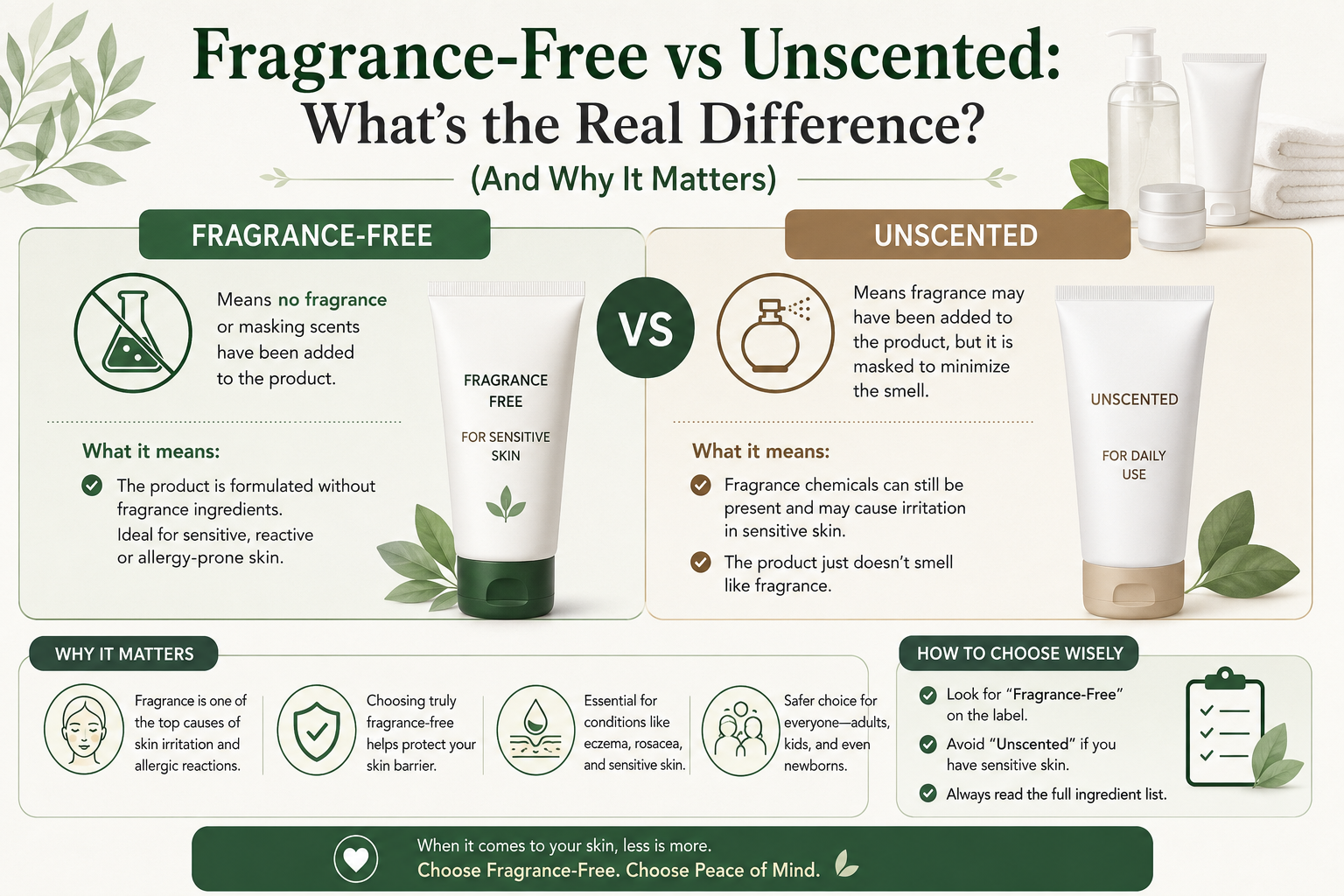
Fragrance-free means no fragrance ingredients — natural or synthetic — were added to the product at all.
Unscented often means a fragrance chemical was added, specifically to mask or cancel out the smell of other ingredients in the formula. The product may not smell like anything noticeable, but that “no smell” is frequently the result of added chemistry, not the absence of it.
In other words: fragrance-free means nothing was added. Unscented can mean something was added to hide a smell.
Why This Distinction Actually Matters
1. For Sensitive or Reactive Skin
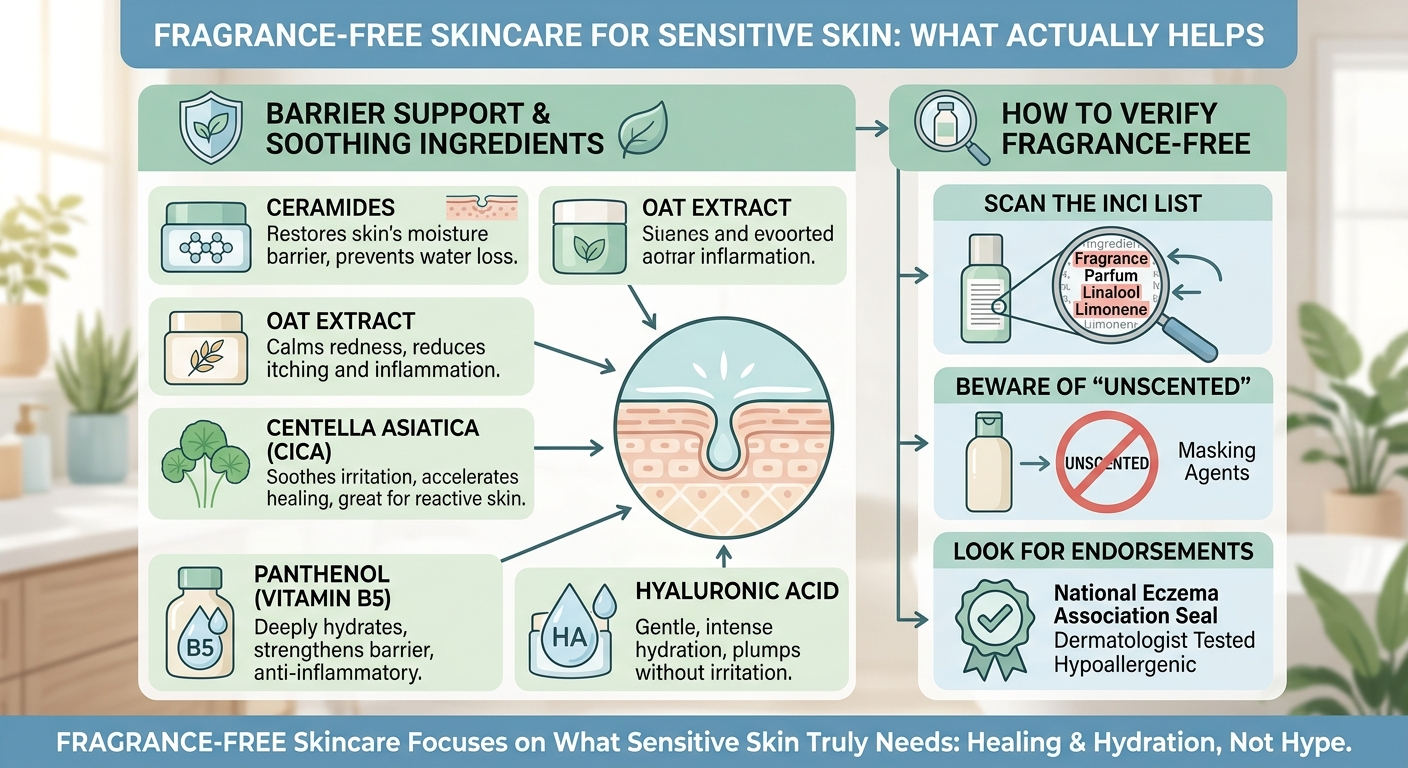
Fragrance — even the masking kind used in “unscented” products — is one of the most common triggers for skin irritation, redness, and allergic reactions. If you’ve ever reacted to a product marked “unscented” and assumed it must have been something else in the formula, the masking fragrance is often the real culprit.
2. For Religious Requirements (Ihram)
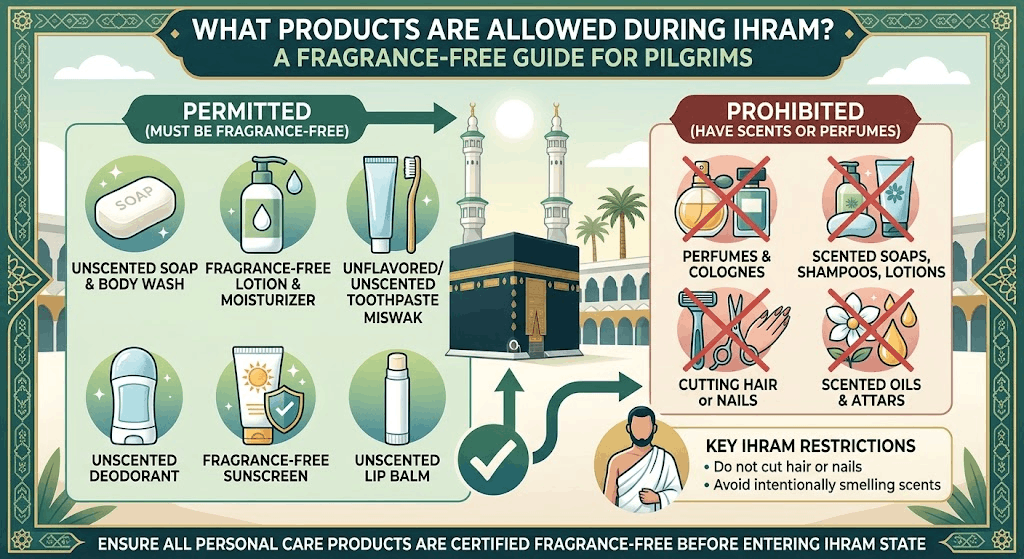
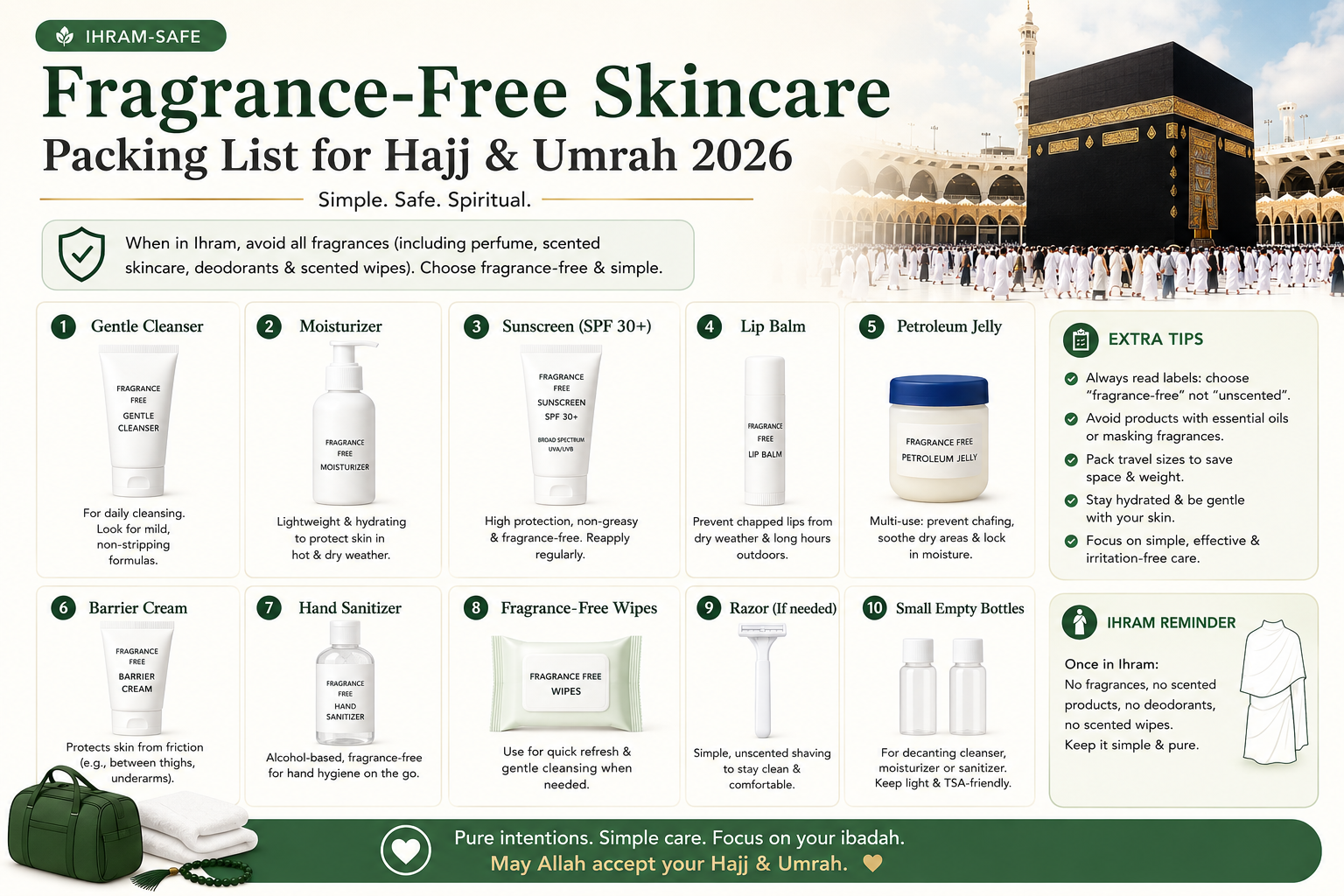
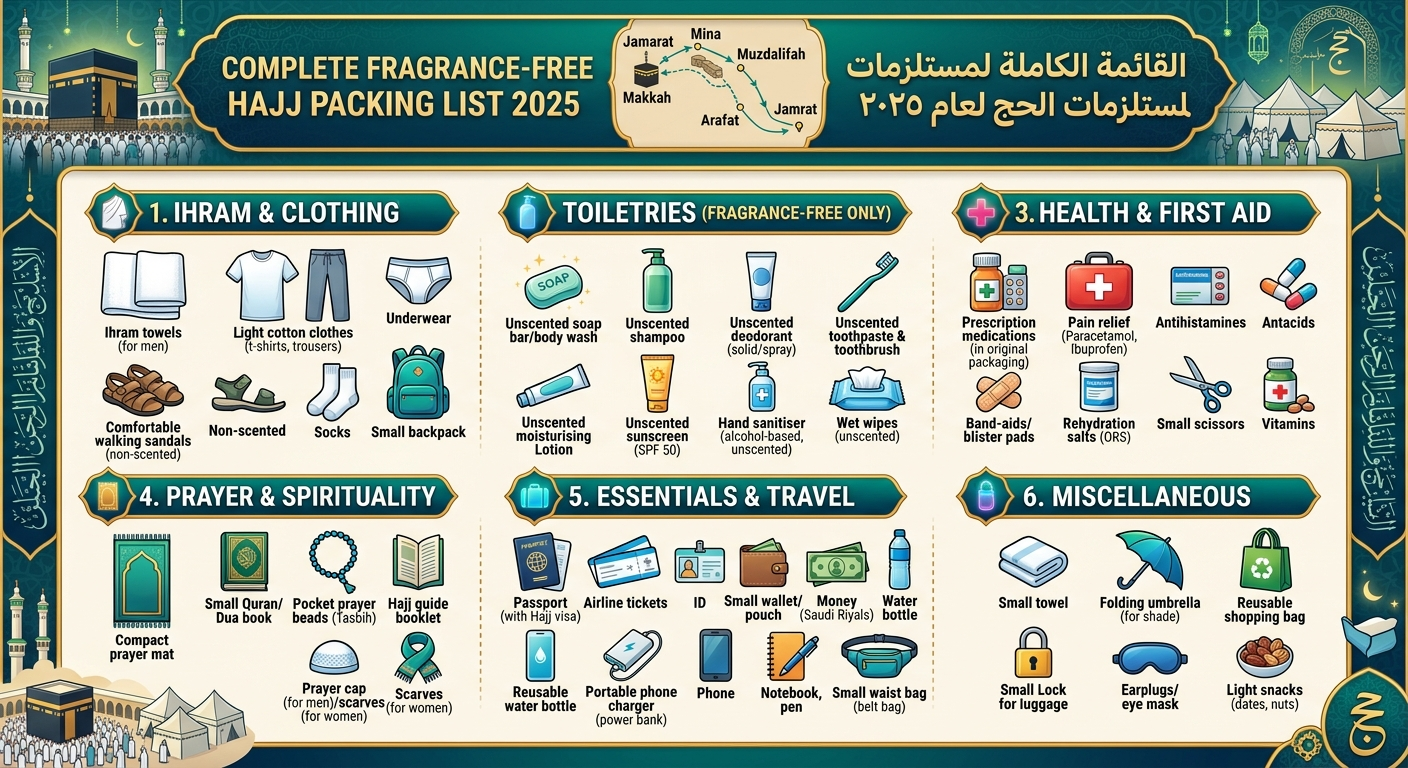
Pilgrims preparing for Hajj or Umrah need to avoid fragrance entirely once in Ihram. An “unscented” product that contains a masking fragrance chemical can technically violate Ihram rules, even though it doesn’t smell like anything. This is exactly why it’s worth choosing products explicitly labeled fragrance-free rather than unscented when packing for pilgrimage.
3. For Babies and Pregnancy
Skin that’s more reactive — during pregnancy, postpartum, or on a newborn — benefits from avoiding fragrance chemicals altogether, not just avoiding a noticeable smell.
How to Actually Check a Product
Reading “unscented” on the front of a bottle isn’t enough. Here’s what to actually do:
- Flip the product over and check the ingredients list for the word “fragrance” or “parfum” — if it’s there, the product isn’t truly fragrance-free, regardless of what the front label says
- Look specifically for the words “fragrance-free,” not “unscented,” on the packaging
- Be cautious of “natural fragrance” or “essential oil” claims — these are still fragrance ingredients and can still cause reactions or count as scent under Ihram rules
What to Look For Instead
A genuinely fragrance-free product should have:
- No listed fragrance or parfum ingredient
- No added essential oils used purely for scent
- A formula built around minimal, gentle ingredients rather than one relying on scent-masking chemistry
Our fragrance-free skincare range — including face wash, soap, sunblock, and aloe vera gel — is formulated with no added fragrance ingredients at all, not just masked to smell like nothing.
The Bottom Line
If you’re choosing a product for sensitive skin, a baby, pregnancy, or Ihram, don’t rely on the word “unscented” alone. Check the ingredients, and look specifically for “fragrance-free” — the small wording difference can mean a genuinely different formula.
Frequently Asked Questions
Can an unscented product still cause a reaction? Yes. If it contains a masking fragrance chemical, it can still trigger irritation in sensitive skin, even though the product has no noticeable smell.
Is fragrance-free skincare only for people with sensitive skin? No. It’s also recommended for pregnancy, babies, and anyone preparing for Hajj or Umrah, since even mild scents aren’t permitted during Ihram.
Does “natural fragrance” count as fragrance-free? No. Natural fragrances and essential oils used for scent are still fragrance ingredients, even though they’re plant-derived.