How to Choose Fragrance-Free Soap in Pakistan: A Simple Buying Guide
When you shop for a fragrance-free soap in Pakistan, the front of the pack is only the first clue. The words “gentle,” “natural,” “herbal,” or “for sensitive skin” do not tell you everything about a cleanser. A useful choice starts with your own needs, a careful label check, and realistic expectations: a fragrance-free product can help you avoid added scent, but it cannot guarantee that every ingredient will suit every person.
This guide explains how to compare bar soaps, what to look for on a label, how to introduce a new cleanser, and how to make a simple everyday choice without buying a complicated routine. It is general shopping information, not a diagnosis or treatment plan.
What fragrance-free means when you are shopping
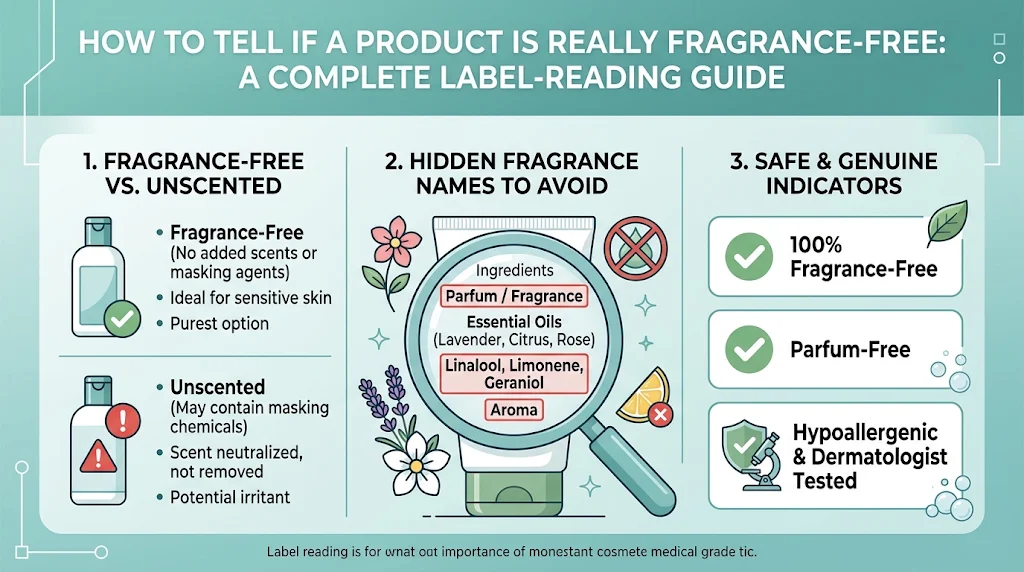
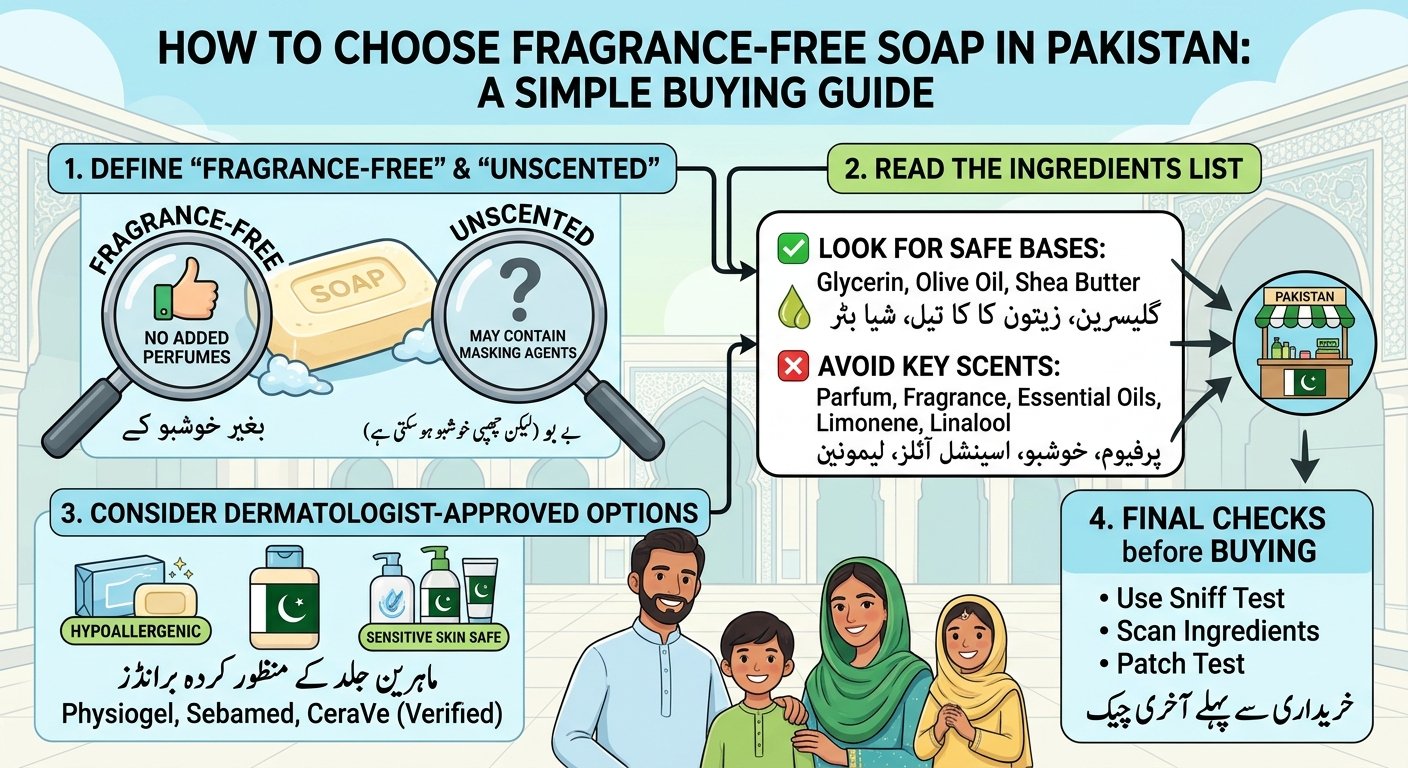
Fragrance-free generally means no fragrance has been added to give the product a scent. An ingredient list may use terms such as “fragrance,” “parfum,” or “perfume” for added scent. “Unscented” can mean that a product has no noticeable smell, but a manufacturer may use a masking ingredient to cover the natural smell of other ingredients. The U.S. Food and Drug Administration explains this distinction and advises people concerned about fragrance to review the ingredient list carefully. Product-label rules can differ between countries, so use the full label on the item sold in Pakistan and contact its manufacturer if an ingredient is unclear.
Start with what you want from a daily soap
Before comparing brands, decide where and how you plan to use the soap. Do you want a basic bar for handwashing, a cleanser for the body, or one product to keep beside a shared wash basin? Your purpose affects the size, packaging, and convenience you need. If you are buying for a household, consider how quickly the bar will be used and whether each person has different preferences.
Think about how your skin usually feels after washing. Some people prefer a shorter wash and a quick rinse; others want a bar that is easy to store between uses. If your skin tends to feel tight after bathing, changing how often or how long you wash may matter as much as changing the brand. Very hot water and vigorous scrubbing can leave skin uncomfortable, so keep washing gentle and follow the product directions.
It can help to write down what you are trying to avoid. For example, you may want to avoid added perfume because you dislike strong smells, because a clinician has advised you to avoid a particular ingredient, or simply because you prefer unscented personal care. A clear reason makes it easier to compare options without being distracted by claims on the front of the pack.
Read the whole label, not only the product name
Look for an ingredient list, directions, the product’s purpose, manufacturer or importer details, and any warnings. Packaging and declarations can vary, so choose products with information that is legible and complete. If the list is missing, covered, or difficult to understand, ask the seller or manufacturer before relying on a claim that matters to you.
Scan for words such as “fragrance,” “parfum,” “perfume,” or “aroma” if your goal is to avoid added scent. Also look at botanical oils and extracts that may be included for scent, such as lavender or citrus oils. Their presence does not mean a product is necessarily unsuitable for everyone, but it does mean it may not meet your personal preference for a scent-free routine. If you know a specific ingredient causes you a problem, check for that exact ingredient rather than relying on broad marketing words.
“Hypoallergenic,” “herbal,” “natural,” and “dermatologically tested” do not tell you whether a product is fragrance-free. Those phrases describe different marketing or testing ideas, and they cannot replace the ingredient list. Likewise, a long ingredient list is not automatically bad, and a short one is not automatically better. Focus on ingredients you personally need to avoid and on whether the product information is clear.
For a deeper walkthrough of common label terms, read our guide to reading a skincare label. Keep in mind that label-reading is a practical screening step, not a substitute for advice from a dermatologist if you have recurring reactions.
How to compare fragrance-free soap options
Compare products on the same practical points: the stated purpose, ingredient information, size, price, packaging, and availability. A low price may be useful, but value also depends on how large the bar is and how long it lasts in your home. Compare the price per bar or per gram when sizes differ. Avoid paying extra for a claim you do not need, and do not assume a premium price means a product is more suitable for your skin.
Consider where you will store the bar. A soap dish that drains and dries between uses can help a bar last longer than leaving it in standing water. If you travel, keep the soap in a clean, dry case and allow it to dry before sealing it away where possible. For a shared bathroom, a covered container can keep the bar clean between uses.
Introducing a new cleanser carefully
When you try a new soap, avoid changing several personal-care products at once. Using one new item at a time makes it easier to notice whether your skin is comfortable with it. Follow the directions on the package, rinse thoroughly, and stop using it if you notice a reaction. A product described as fragrance-free can still contain ingredients that do not suit a particular person.
The American Academy of Dermatology recommends testing new skin-care products on a small area before regular use and stopping if a reaction develops. A wash-off product is tested differently from a leave-on cream, so follow a dermatologist’s guidance and the product instructions rather than leaving soap on the skin. If you have a diagnosed allergy, eczema, persistent rash, swelling, or a severe reaction, seek advice from a qualified health professional instead of trying to solve it by cycling through products.
Common shopping mistakes to avoid
- Choosing by scent alone: a mild-smelling product is not necessarily free of added fragrance, and a naturally scented ingredient may not be perfume. Read the label.
- Trusting a single front-label claim: “natural,” “gentle,” or “for sensitive skin” is not a substitute for ingredients and directions.
- Assuming fragrance-free means allergy-proof: people can react to many ingredients, including ingredients that are not fragrances.
- Switching the whole routine at once: it becomes harder to identify which change, if any, affected your skin.
- Using a bar beyond its intended purpose: follow the directions and avoid applying a cleansing bar to delicate areas unless the label specifically says it is suitable.
- Ignoring storage: a bar left wet in a puddle may soften quickly. Let it drain and dry between uses.
A simple buying checklist
Before you add a bar to your basket, ask yourself:
- Does the product information clearly state what it is for?
- Can I read the full ingredient list and directions?
- Does the label fit my preference about fragrance and any ingredients I personally avoid?
- Is the size and price suitable for how often I expect to use it?
- Can I contact the seller or manufacturer if I need clarification?
- Do I know how I will store the bar so it can dry between uses?
If you answer “no” to an important question, pause and find the missing information. A quick question to a seller can be more useful than relying on an uncertain online claim.
Explore a clearly listed option
Fragrance Free Care lists a Fragrance Free Soap for everyday use. Review the current product details and price on its page before ordering; availability and prices can change. You can also browse the full fragrance-free products collection to compare other personal-care items. If you have a question about ingredients, contact the store before purchase and confirm delivery terms for your location at checkout.
Final takeaway
Choosing fragrance-free soap in Pakistan is easier when you start with your own needs, read the full label, compare size and price, and introduce a new product carefully. Look beyond words such as “natural” or “gentle,” ask for ingredient details when they are missing, and avoid expecting a cleanser to solve a medical concern. A straightforward, well-described product and a simple routine are practical places to begin.
Sources: U.S. FDA, Fragrances in Cosmetics; American Academy of Dermatology, How to test skin-care products. This article is general information and is not medical advice.